





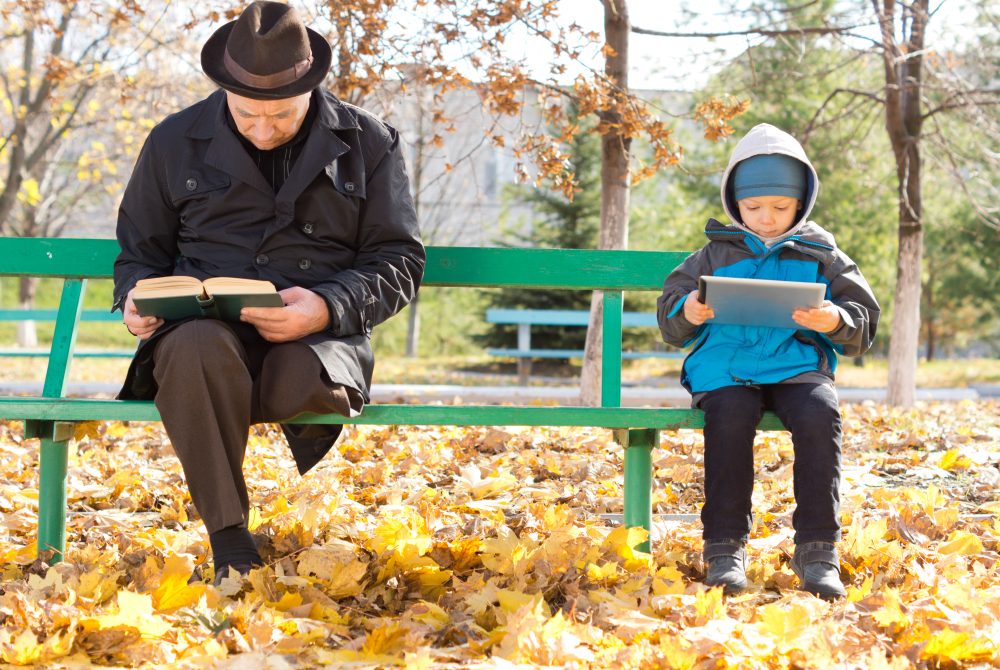
Humans are social beings. Yet, we’re becoming less and less so, and it’s taking a toll on our physical and mental health. Despite living in an age of unprecedented digital connectivity, social isolation and loneliness have reached epidemic proportions in America. While many complex factors contribute to this public health crisis, funders can help counter its effects by investing in intergenerational programs (IGPs) that provide meaningful connections between youth and older adults and benefit the wellbeing of both generations.
Americans are spending more time alone than ever before. They have fewer friends and engage in fewer daily social interactions than they did in the past. About one-quarter of older adults are socially isolated, and 43% report feeling lonely. The problem is particularly pronounced among women over 75, nearly half of whom live alone.
Meanwhile, loneliness among children and adolescents is also on the rise. A recent study in JAMA found that feelings of loneliness among 12- to 18-year-olds increased from 20% in 2007 to almost 31% in 2021.
There are serious health consequences to this social disconnection. Both loneliness and social isolation are associated with higher rates of depression, anxiety and suicide in children and older adults. For seniors, social isolation substantially increases the risk of dementia, cardiovascular disease and premature death.
It is also a health equity issue. While all ages and demographic groups can experience loneliness and social isolation, populations with the highest prevalence are lower-income individuals, ethnic and racial minority groups, rural residents, LGBTQ+ individuals, and those who have been marginalized and discriminated against.
The growing generational divide
Over the last several decades, profound societal changes have contributed to the erosion of natural social interactions — especially between young and older Americans. Today, only 3.7% of U.S. households are multigenerational, where children and grandparents live together. Further separating generations is the rise of retirement communities, as well as education and job pursuits that have scattered families geographically and weakened ties between extended family members. Additionally, dependence on digital communications, which, on one hand, can help support social connections over distances, also diminishes in-person engagement, especially for youth, often resulting in lower quality interactions and greater feelings of loneliness and isolation.
Adding to the problem, age segregation fosters harmful misconceptions about aging that further impact generational interactions. With limited exposure to older adults, children and teens often develop negative stereotypes of seniors and undervalue their abilities, knowledge and wisdom.
Unfortunately, ageism also affects philanthropy. Despite the clear need for programs and interventions that promote social connectedness for both youth and seniors, according to Grantmakers in Aging, less than 2% of philanthropic funding goes toward aging-related services.
Investing in a two-for-one solution
One effective way for funders to invest in improving the health and lives of both youth and older adults is through intergenerational programs that help rebuild lost connections between school-aged children and seniors. While there are many IGP models and associated outcomes, these programs have demonstrated significant benefits for both groups. For older adults, those include reduced loneliness and isolation, a stronger sense of purpose and self-worth, and improved cognitive function and life satisfaction. For youth participants, IGPs can enhance confidence, self-esteem and academic performance, as well as social skills and mental health. The programs can also foster a greater sense of community and compassion, along with a better perception of, and respect for, seniors.
IGPs come in many forms that offer varying levels of contact between participants. Some of the more common approaches include older adults providing mentoring and tutoring, young people supporting older adults in activities such as teaching technology skills or spending time with homebound individuals, and collaborative activities such as volunteering on a community service project together.
One emerging trend is the intergenerational shared site — facilities that co-locate programs for children and older adults to promote more frequent, natural interaction. An interesting example is a nursing home in rural Kansas that was converted into an intergenerational facility and now also houses a local K-12 school. Nursing home residents volunteer in classrooms, while high school students have the chance to shadow clinicians working with residents, gaining skills while interacting with their elders.
Essential elements for program success
No matter what type of IGP a funder is looking to invest in, there are several key elements that, in the Humana Foundation’s experience with IGPs, as well as documented research, have been shown to increase the program’s success. They include:
- Mutual value: Activities that are meaningful and provide both age groups with a sense of usefulness and competency.
- Cross-generation preparation: Setting expectations and providing an understanding of the other age group’s needs, experiences and abilities before the project begins.
- Relationship building: Allowing time for participants to gradually get to know one another makes interactions more natural and effective.
- A listening and learning approach: It’s critical to listen to and understand the needs of those we serve. An approach we’ve taken at the Humana Foundation that has helped shape our intergenerational investments has been the establishment of our Senior Counsel, comprising seniors 65+, and high school juniors and seniors, who offer valuable guidance. It also provides an opportunity for these two age groups to interact, share ideas and their wisdom, further cementing the connections that are essential to health and wellbeing.
As loneliness and social isolation increasingly affect both young and older Americans, the case for intergenerational programs has never been clearer. Philanthropy can play a pivotal role by investing in and scaling these initiatives — bridging the generational divide and fostering relationships that enrich and improve lives while reducing ageism that diminishes the value of our aging population.
Tiffany Benjamin is CEO of the Humana Foundation, where she leads efforts to advance health equity and foster intergenerational connections that improve wellbeing for children, seniors and veterans.
Related Inside Philanthropy Resources:
For Subscribers Only
