





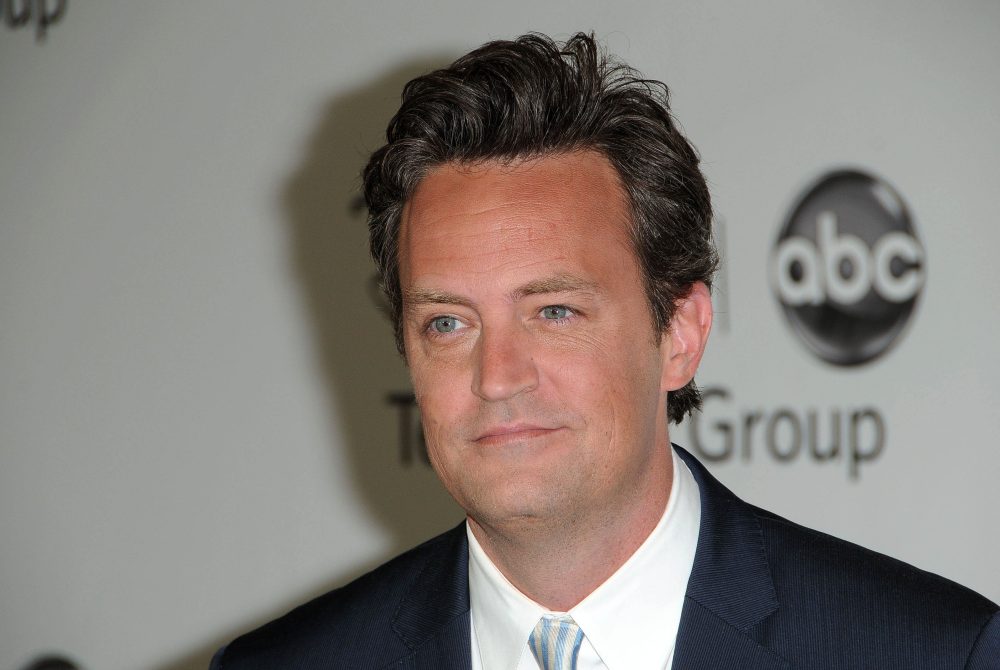
The Matthew Perry Foundation, established in November 2023, marked a milestone with its inaugural Summit on Addiction and Recovery at Creative Artists Agency (CAA) in Los Angeles on Sept. 18. The gathering, in partnership with CAA Foundation, brought together leaders in medicine, policy and the arts — including NPR’s Brian Mann and Mass General Brigham’s Dr. Sarah Wakeman — for candid conversations about dismantling stigma and expanding access to care.
Perry, who was best known for his starring role in “Friends,” and who battled with addiction throughout his life, passed away in 2023 from an overdose of ketamine. Five people were later prosecuted for helping him acquire lethal doses of the drug.
When I first caught up with the foundation last year, I spoke with Board President Doug Chapin and Executive Director Lisa Kasteler-Calio about their vision for carrying Perry’s legacy forward and their mission of centering dignity, compassion and community while dismantling stigma. Chapin and Kasteler-Calio weren’t just his producer and publicist, but friends who felt responsible for Perry in life and who are dedicated to honoring his legacy. Their words then made it clear that the foundation would be about more than Hollywood headlines.
This fall’s announcement of a partnership with Healing Appalachia, the nation’s largest recovery-based music festival, is another example of what they meant. Held in Ashland, Kentucky, the festival draws more than 20,000 people annually and has helped move over $1 million to grassroots groups. The foundation will provide housing and support for nearly 1,000 volunteers in recovery who keep the festival running. The foundation is also turning to one of Perry’s lifelong passions: hockey. Through a new partnership with the NHL, the Goals for Recovery campaign will channel the energy of the sport into support for people facing addiction.
Back at the summit in Los Angeles, the foundation underscored its core commitment to destigmatizing addiction, even among healthcare professionals, where blind spots remain. One of the day’s most notable moments came when Hunter Biden joined Brian Mann, NPR’s first national addiction correspondent, for a virtual conversation. Biden showed surprising candor and vulnerability, crediting the steady support of his family through his struggles and sharing how he’s learned to tune out public opinion, turn inward and lean on those closest to him.
Later, I joined one breakout session focused on narrative change and storytelling, led in part by R. Scott Gemmill, the Emmy-nominated writer, producer and showrunner whose medical drama “The Pitt” seamlessly incorporates addiction storylines. Also among the people I met that day was a founder of an addiction support nonprofit, Song for Charlie, which has developed a widely accessible fentanyl education course for parents and caregivers. I also met a voice actress with loved ones touched by the disease. Every person carried their own connection to addiction, a reminder of both the reach of the crisis and the urgency of the foundation’s mission.
Related Inside Philanthropy Resources:
For Subscribers Only
A conversation with the “good doctors” on reframing addiction
After the session with Mann and Hunter Biden, Dr. Sarah Wakeman of Mass General Brigham sat beside Dr. Sarah Kler, the first-ever Matthew Perry Foundation Fellow in Addiction Medicine, in what the foundation playfully called the “the good doctors” session. Both women represent a new generation of leaders working to reframe addiction not as a moral failing, but as a treatable medical condition.
Wakeman, who directs substance use disorder initiatives at Mass General, recalled her own path into the field and her original plans to be an HIV doctor. But an internship at a state prison altered her course. “Pretty much everyone I met had addiction, and also everyone had trauma. I importantly met a mentor who was doing addiction medicine. I’d never even heard of that as a thing.”
She spoke about addiction as a very treatable health condition, even if public perception still lags far behind. She pointed to patients she’s cared for over 15 years who are now parenting, working and thriving — stories rarely visible in headlines dominated by overdoses and relapse. “Every day, I get to see people who are living these amazing lives in recovery, and they are some of the most resilient, gritty, fun people to be around.”
But Wakeman was also blunt about the barriers that persist. Typically, she said, medical practitioners in the U.S. still treat addiction as an outlier condition or a lifestyle choice rather than an actual illness. “Most medical students learn nothing about addiction, maybe a couple hours over four years,” she said. Too often, patients are blamed and bounced from care. “Addiction is the only disease where you’re actually kicked out of treatment for having a symptom of your illness.”
That disconnect, between evidence and practice, compassion and stigma, is exactly why the Matthew Perry Foundation launched its fellowship with Mass General Brigham. Kler, the program’s inaugural fellow, is now helping carry that mission forward on the ground.
Like Wakeman, she was drawn early to medicine, but her work began helping low-income patients facing housing insecurity. Again and again, addiction was part of their stories. “I watched the ways in which they touched the health system, or didn’t, and really were not supported,” she said.
Today, Kler spends her days working with some of the most innovative models of addiction care in the country. She’s enthusiastic about the Bridge Clinic, a walk-in space designed to eliminate barriers. “A person can just walk in without an appointment and meet a doctor that day who has expertise in the full array of treatment options. Whether they’re ready to make changes that day, or just want someone to treat them with kindness and humanity, they can begin.”
On the medication front, Kler is attentive to new treatments, including monthly injectable versions of buprenorphine that release patients from daily dosing, or drugs like GLP-1s (better known for weight loss) that may prove effective for alcohol use disorder. Each represents another tool in shifting addiction from stigma to standard care.
When asked what single change they’d make if given a magic wand, Kler quickly said that every community should have at least one expert who can guide doctors on available treatment options. Wakeman’s answer was just as direct. “Bring it back into the medical system. Treat this like any other health condition. Stop the shaming and stigma and just provide treatment and care and compassion and love.”
The Matthew Perry Foundation’s evolving work is one bright spot in a philanthropic landscape that has, for the most part, paid inadequate attention to the toll of drug addiction — particularly regarding the opioid crisis that has claimed hundreds of thousands of lives in recent years. There are other funders focusing their attention on the problem, like the Foundation for Opioid Response Efforts (FORE), but with the cultural cachet that comes with the story of its famous namesake, one hopes the Matthew Perry Foundation can further move the needle on destigmatizing addiction care.
After nearly seven hours of programming and networking, the inaugural Matthew Perry Foundation event drew to a close. The late actor once said that helping others find recovery mattered more than any acting role he played. The summit felt like another example of that promise taking root.
