





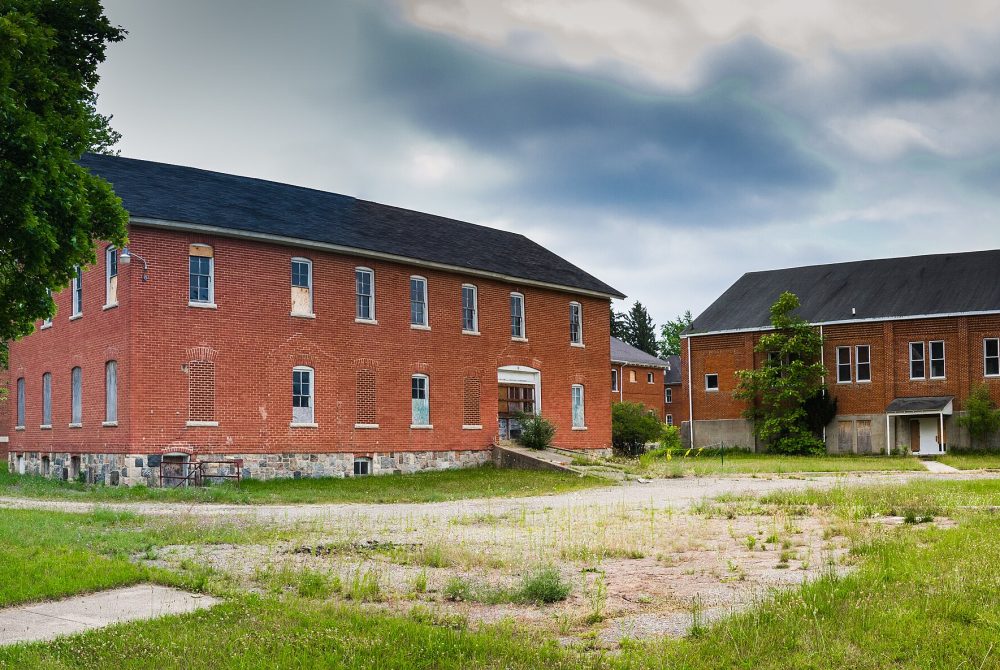
From 1819 to 1969, tens of thousands of Indigenous children were taken from their homes, often by force or coercion, to one of 526 government-run Indian boarding schools in an attempt to assimilate them into European/American Christian culture while obliterating their Native heritage.
Children were required to wear uniforms, change their names and refrain from speaking in their native languages or eating traditional foods. Many were beaten and used as slave laborers. A 2024 Washington Post investigation found that at least 3,104 Native American children died in boarding schools between 1828 and 1970. Shockingly, it wasn’t until 1978 that parents won the legal right to prevent family separation.
In 2012, the nonprofit National Native American Boarding School Healing Coalition (NABS) was formed to understand and address the ongoing trauma created by U.S. Indian Boarding School policies through education, research, advocacy and policy.
The coalition was fiscally sponsored by the Native American Rights Fund before becoming financially independent in 2015, and has played a pivotal role in educating the American public on the legacy of U.S. Indian Boarding Schools. Most notably, it has worked closely with the Department of the Interior’s Federal Indian Boarding School Initiative, which was launched in 2021 to “recognize the troubled legacy of federal Indian boarding school policies with the goal of addressing their intergenerational impact and to shed light on the traumas of the past.”
In 2024, President Joe Biden issued a historic apology for the government’s role in running boarding schools. His successor’s administration, meanwhile, has cut funding for NABS and is taking aggressive steps to erase narratives that “portray American and Western values as inherently harmful and oppressive.” In light of this stark contrast, it’s more important than ever that philanthropy educate the public about the legacy of U.S. Indian Boarding Schools and facilitate healing.
“The boarding school experience is well known in Indian Country,” said the grantmaking staff at the Bush Foundation, a St. Paul, Minnesota-based funder that supports organizations in Minnesota, North Dakota, South Dakota and the 23 Native nations that share this geography, in a statement to IP. “Yet there still is a gap in general awareness and knowledge of this history, including a deeper understanding of the policy’s intent to destroy Tribal communities and take land from Native Americans.”
Here’s a quick overview of the National Native American Boarding School Healing Coalition, a look at how funders are healing harms caused by U.S. Indian Boarding Schools, and a playbook for grantmakers moving forward.
Background on the National Native Boarding School Healing Coalition
In 2020, NABS published its 10-year strategic plan and announced a $10 million grant from the Kendeda Fund, the charitable vehicle of Diana Blank, the former wife of Home Depot cofounder Arthur Blank. (The fund sunset in 2023.)
Fast-forward to 2024. According to NABS’ annual report, it had 1,602 coalition members, launched the first of its kind national Indigenous Digital Boarding School archives and held 20 healing circles for boarding school survivors and descendants. The most recent stop in its Oral History Project was in Rapid City, South Dakota, from September 21–26.
Notable NABS supporters include Omidyar Network, the Mellon, NoVo and W.K. Kellogg foundations, Native Voices Rising, and donor-advised fund providers Vanguard Charitable, Philanthropi Charitable and the Chicago Community Foundation. (Mellon’s site features an essay on U.S. Indian Boarding Schools; it also previously awarded a grant to the Remembering the Children Memorial on the grounds of the former Rapid City Indian Boarding School.)
NABS’ report noted that it receives 57% of its funding from government agencies. In May, The Imprint’s Nancy Marie Spears reported that the National Endowment for the Humanities had terminated $283,000 in unspent funds that NABS planned to use to digitize records for its National Indian Boarding School Digital Archive. As a result, Marie Spears wrote, “The coalition is now seeking to fill the gap with other sources of revenue.”
Omidyar Network: Promoting healing through its Cultivating Repair program
In December 2023, the hybrid foundation and LLC established by eBay founder Pierre Omidyar and his wife, Pam, launched a program called Cultivating Repair to support efforts to heal past and present-day harms stemming from the legacies of colonialism and slavery in the U.S., including U.S. Indian boarding schools.
Omidyar Network’s support for NABS “expands access to boarding school records for survivors and descendants,” said Vanessa Mason, principal, Programs at Omidyar Network. “This is critical to understanding history and its consequences on tribal nations, and giving access to the healing process. NABS is the only national coalition organizing around the issue of boarding school healing, thereby addressing a damaging and seldom discussed part of our nation’s history. Their work to redress historical wrongs and take preventive measures for communities to move forward through data sovereignty and restorative justice serves as a powerful example of repair in action that we can all learn from.”
In addition to NABS, the program has supported several organizations working toward healing the legacy of U.S. Indian boarding schools, including the Decolonizing Wealth Project, Land Justice Futures and BLIS Collective.
By the end of 2025, the Cultivating Repair program will transition into what Mason called “a community-led, fiscally sponsored project focused on fostering a healthy culture of repair and prototyping the infrastructure to support that.”
Related: “AI Opened a Window.” Omidyar Network’s Mike Kubzansky on the Funder’s Strategic Evolution
Bush Foundation: Supporting the Department of the Interior’s oral history project
Foundations interested in advancing narrative change have been drawn to efforts that share the stories of boarding school survivors with the public.
In December 2024, the Department of the Interior announced that the National Endowment for the Humanities, along with the Mellon, W.K. Kellogg, Bush, Kresge, Northwest Area and Rasmuson foundations, contributed $13.6 million to fund the preservation and exhibition of boarding school survivor stories as part of the Federal Indian Boarding School Initiative.
“Beyond the importance of this work to support healing, we hope [the initiative] will build our country’s ability to understand both past and future policy actions within this context,” said Bush Foundation grantmaking staff in a statement to IP. “If more policymakers truly understand the significance of the boarding school era — both the harm to Native people and how the U.S. government benefited from these policies — it could reopen and reframe a number of policy conversations, such as child welfare, public education, land reclamation and other issues related to Native self-determination.”
As far as policy conversations are concerned, NABS’ 2024 annual report cited its advocacy for U.S. Senate Bill 1723. Sponsored by Sen. Elizabeth Warren (D-Mass.), the bill would establish a Truth and Healing Commission on Indian Boarding School Policies to, among other things, investigate the impacts and ongoing effects of Indian boarding school policies. The Senate passed the bill by unanimous consent in December 2024. The U.S. House has yet to vote on a companion bill, H.R.7227.
Tiwahe Foundation: Reversing epistemicide to restore Native lifeways and facilitate healing
The U.S. Indian Boarding School program was an exercise in epistemicide, defined as the systematic killing, silencing, annihilation or devaluing of a knowledge system. The Native-led Tiwahe Foundation seeks to reverse epistemicide through strengthening Indigenous leadership and cultural identity by addressing and overcoming historical trauma faced by Native communities and supporting initiatives that foster the preservation and revitalization of Native lifeways, languages and traditions.
“I’m from a family that, like every Native family, is severely impacted by this,” said Executive Director Nikki Love (Pieratos) (Bois Forte Anishinaabe). “Every single day, we work to reverse the legacy of these ongoing impacts. It’s super-personal mission work that also aligns with Tiwahe’s mission work.”
Through its Oyate Leadership Network, the Minneapolis-based foundation, which has received support from the Bush Foundation, MacArthur Foundation and Headwaters Foundation for Justice, cultivates innovation in leadership rooted in Indigenous ways of being. “Within our cohorts, learning communities and networks we create, we know our people have the answers,” Pieratos said. “When our spirit is taken care of, when healing is truly present, identity is restored, then you have self-confidence, then you have agency, and then people will figure out the other avenues and points of access once that’s there.”
Tiwahe Foundation invested $4 million from 1996 to 2024 through its American Indian Family Empowerment Program (AIFEP), which makes grants to support Native individuals and families in their pursuit of professional, educational and cultural goals. One grantee, James Vukelich Kaagegaabaw, is the author of “The Seven Generations and the Seven Grandfather Teachings,” which explores Indigenous wisdom based on ancient teachings from the Anishinaabe / Ojibwe people. Tiwahe Foundation disburses $250,000 in AIFEP grants annually.
“We can talk about the effects of boarding schools and pull disparity ratios [between Native and non-Native communities], but at the base of it all, it is epistemicide,” Pieratos said, “and that is where we are helping those that are flourishing. They just need the resources, facilitation and convening. We’re helping breathe life and breathe spirit back into our folks that are doing those things to restore our lifeways.”
Related Inside Philanthropy Resources:
For Subscribers Only
MacArthur Foundation: Supporting organizations with unrestricted funding
The MacArthur Foundation’s grantmaking underscores the importance of unrestricted grants. The foundation provided general operating support to IllumiNative, a Native-woman-led racial and social justice organization “dedicated to increasing the visibility of — and challenging the narrative about — Native peoples.”
IllumiNative used MacArthur’s unrestricted support to fund its “American Genocide” podcast, which explores the history and impact of the Red Cloud Indian School in Pine Ridge, South Dakota, and how communities are working toward healing.
“At the MacArthur Foundation, we prefer to award unrestricted gifts in the form of general operating support,” said Lauren Pabst, senior program officer, journalism and media, in a statement to IP. “Because we fund organizations generally, we have no involvement in the topic selection of their reporting projects, as was the case here with IllumiNative’s podcast. In recent years, we have noted that many of the newsrooms and documentary programs we fund have been independently reporting on this topic, helping shed light on this critical part of American history, which has been underreported for decades.”
A playbook for funders moving forward
The perspectives I collected from foundation leaders can double as a playbook for funders interested in addressing the legacy of Indian boarding schools at a time when the Trump administration is forcing federally funded institutions to sidestep some of the darker chapters of U.S. history.
“We believe the need for repair is multigenerational and multifaceted, and that philanthropies must expand resources to support communities and ecosystems that practice repair and healing, rather than just isolated projects,” said Omidyar Network’s Mason. “This includes sharing and ceding power toward community-directed strategies and community-owned infrastructure, strengthening the ecosystem infrastructure supportive of U.S. Indian boarding school healing and other issues of repair through co-creation, collaboration, and connection, and resourcing repair holistically, including physical space, land, wellness support and peer support networks.”
Bush Foundation grantmaking staff encourage philanthropy to proceed with humility. “It is one of the most critical truths of philanthropy: good intent is not enough to ensure that we are actually doing good,” read their September 25 statement. “Philanthropy, done well, can be a great force for good in the world. And philanthropy can also cause great harm. That has been the case with past philanthropic efforts that ended up causing lasting harm to Native families and communities that are still working to recover from more than a century later.”
Echoing Mason’s sentiments, Bush staff underscored “the importance of ensuring the work we fund is done in partnership with the people most affected by the issues and the people most potentially affected by a change. We know the consequences of our work can be significant to others. We take this seriously.”
Looking ahead, the Decolonizing Wealth Project, which was founded and is led by author and activist Edgar Villanueva, plans to launch the National Truth & Healing Fund to address “the painful legacy of Native American boarding schools by providing funding to support efforts to advance truth, reconciliation and healing across Indian Country.” The project has yet to issue a call for applications; however, it encourages interested organizations to check for updates on its socials at @decolonizingwealth.
Other groups committed to promoting healing from the legacy of boarding schools include First Nations Development Institute, Black Hills Area Community Foundation, Dakota Charitable Foundation and Partnership with Native Americans, among many others.
